
Messy incoming data
{
  "name": "Alice",
  "age": "30",
  "email": "alice@"
}
# missing fields, wrong types
ValidationError: age, emailThe missing guide to data validation in Python
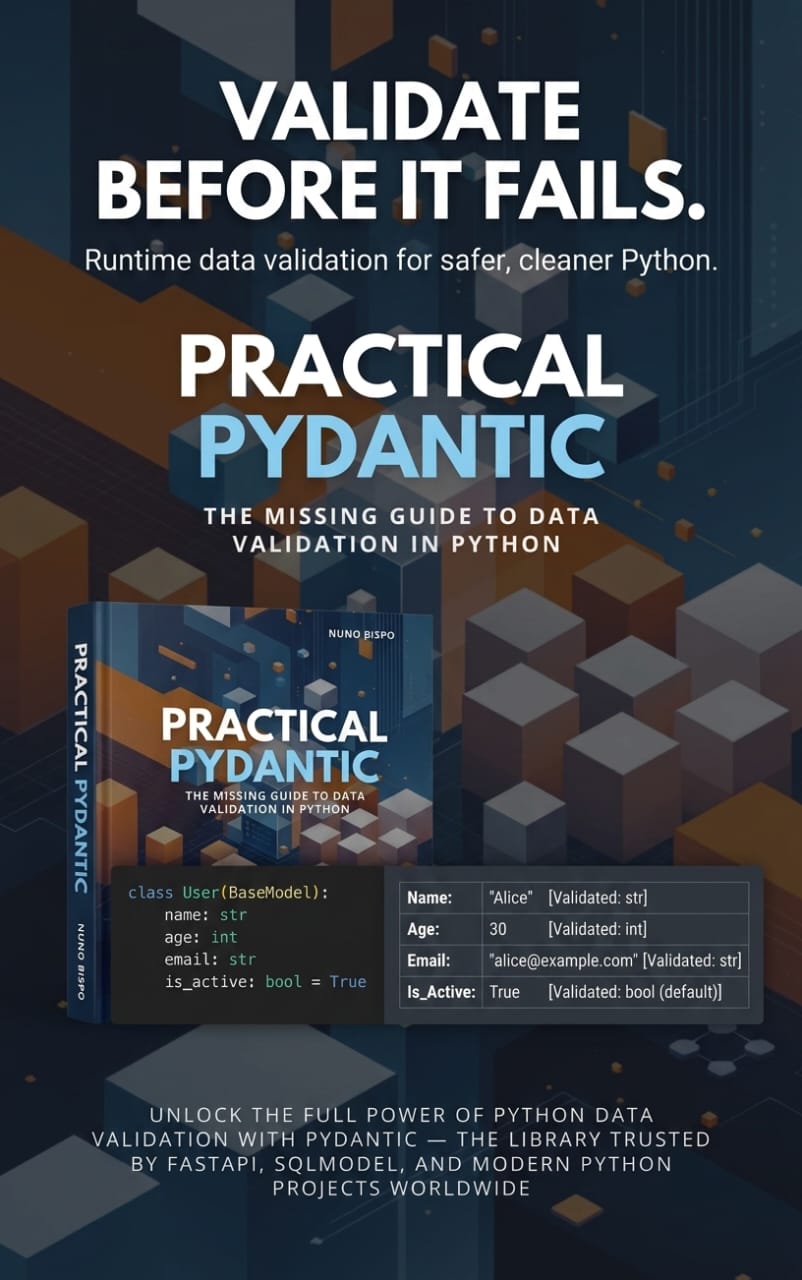
Bad data breaks good code. Practical Pydantic takes you from the foundations of runtime validation to real-world APIs, data pipelines, configuration, and machine learning workflows — so you always know which tool is right for the job.
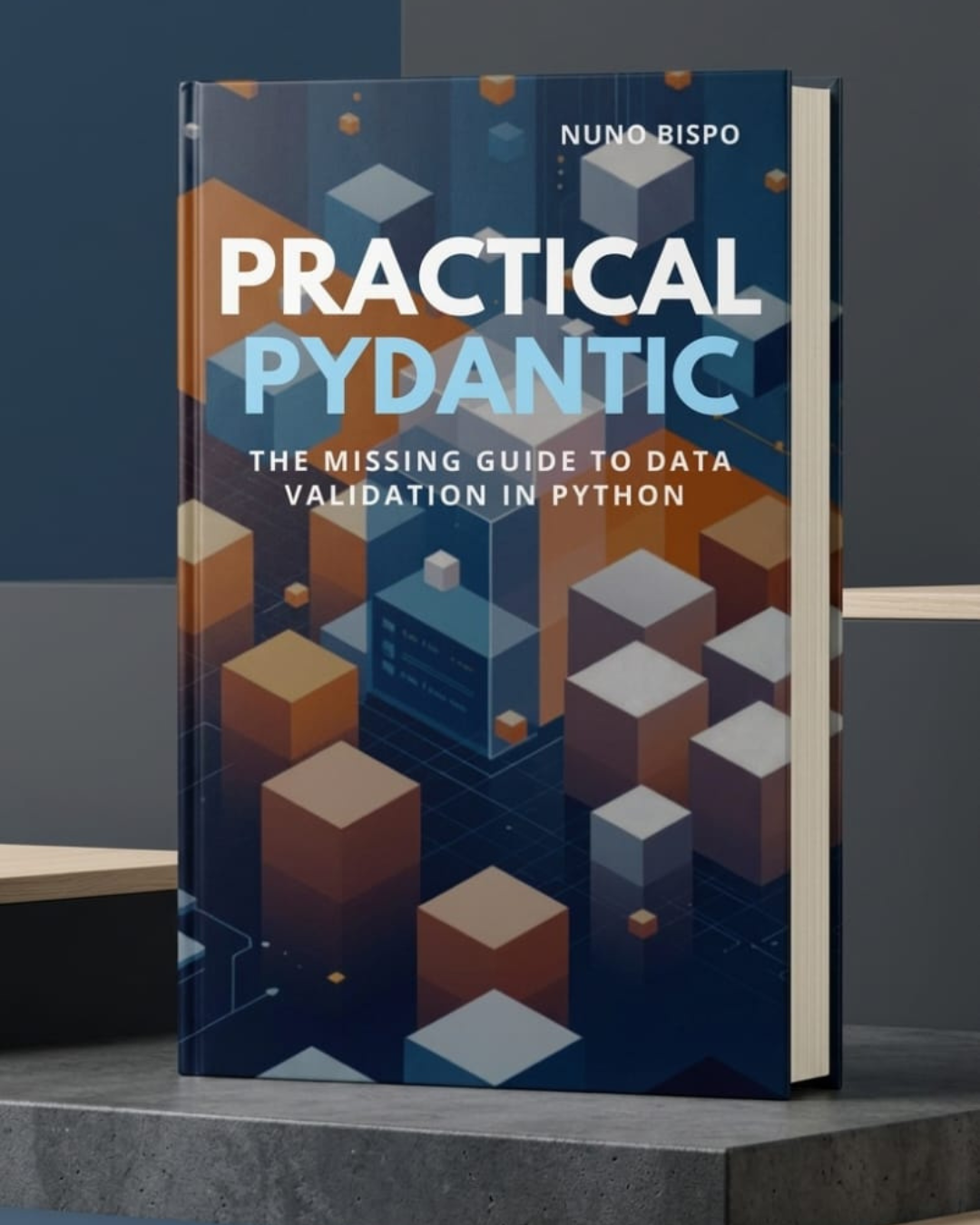
Unlock the library trusted by FastAPI, SQLModel, and modern Python projects worldwide.
Why this book exists
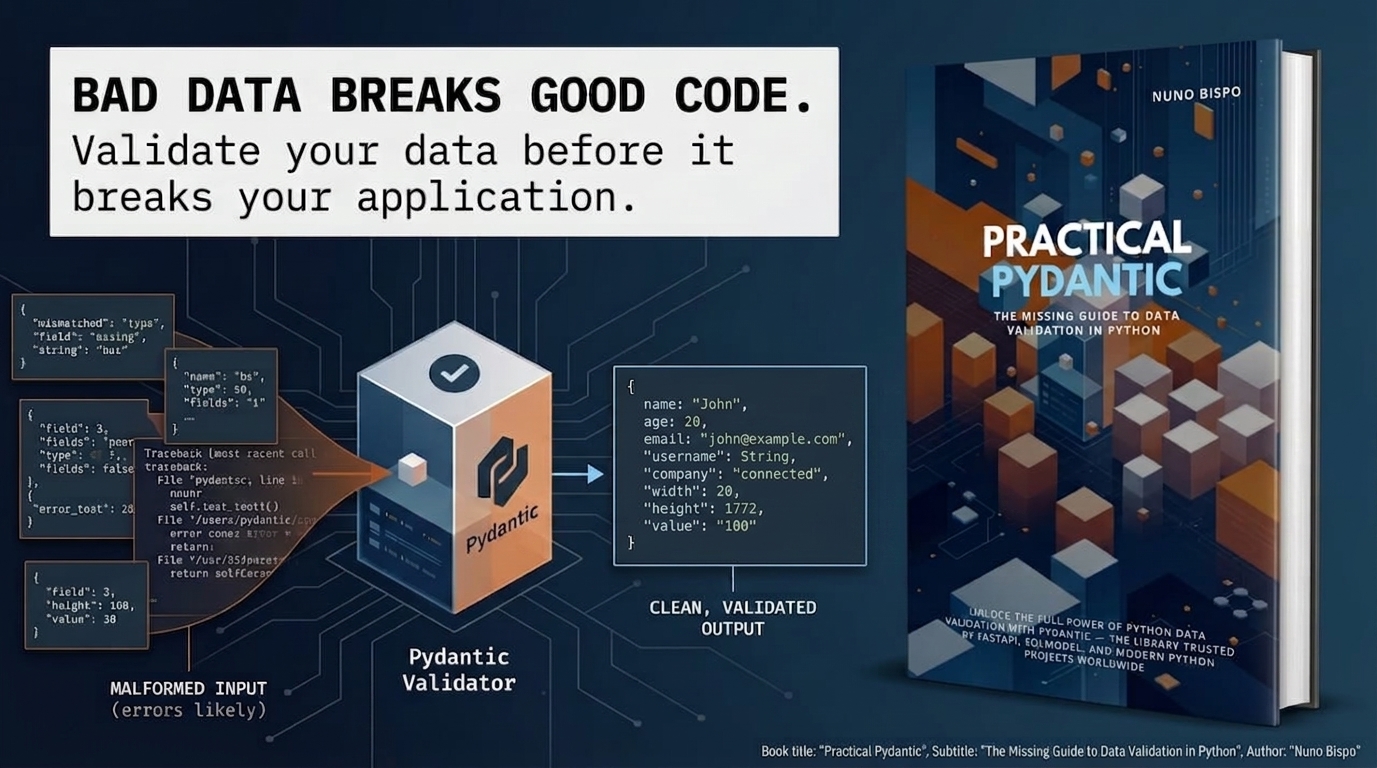
Bad data breaks good code.
You’ve written Python that works perfectly in testing, only to watch it fail in production because of a malformed API request, a messy CSV, or a missing config value. That’s the hidden cost of Python’s flexibility: without runtime validation, you’re always one bad input away from a crash.
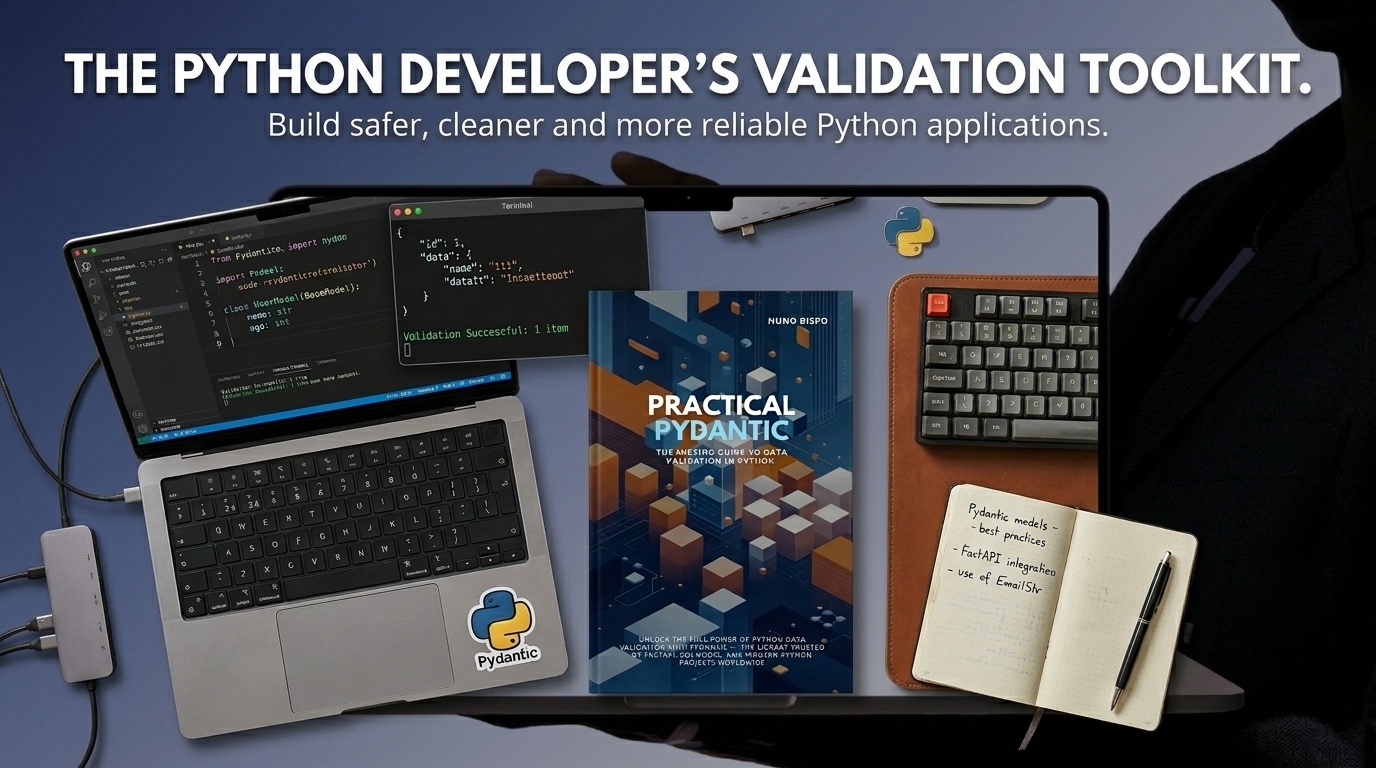
This book is the roadmap for Python developers, data engineers, and FastAPI users who want safer, cleaner, and more reliable code — without guessing whether the data is safe.
How Pydantic changes the work
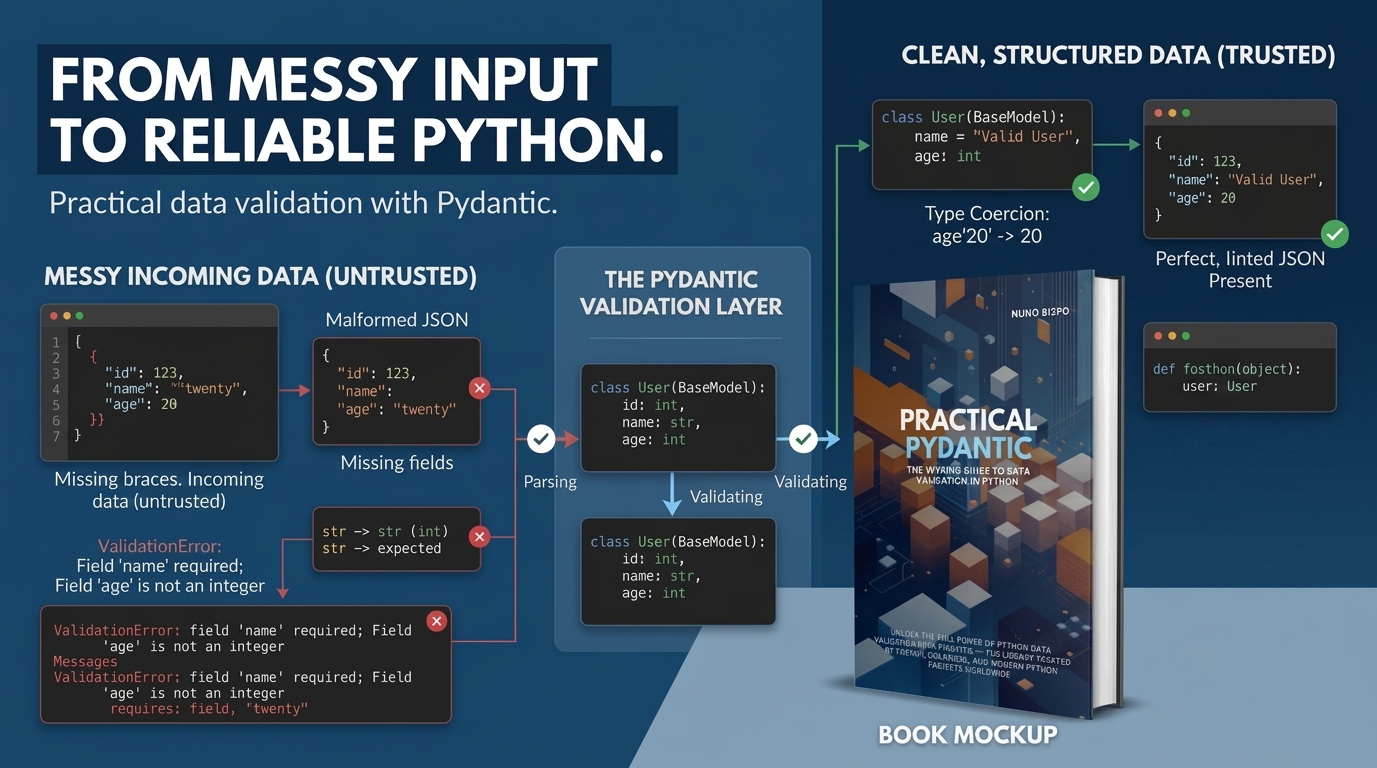
Declare the shape of your data once. Pydantic parses, coerces, and validates at runtime — then hands you typed objects you can trust.
{
"name": "Alice",
"age": "30",
"email": "alice@"
}
# missing fields, wrong types
ValidationError: age, emailfrom pydantic import BaseModel, EmailStr
class User(BaseModel):
name: str
age: int
email: EmailStr
is_active: bool = TrueUser(
name='Alice',
age=30,
email='alice@example.com',
is_active=True
)
# types coerced · defaults appliedWhat you’ll take away
Runtime validation, models, serialization, and the v1 to v2 shift — the concepts you must know before the shortcuts.
FastAPI APIs, ETL pipelines, environment settings, nested models, custom validators, and performance tuning.
Honest comparisons with Marshmallow, attrs, dataclasses, TypedDict, Cerberus, and Voluptuous — including when not to use Pydantic.
Put the pieces together in a complete project, then keep going with exercises, source code, and a next-steps appendix.
Full source for the examples and solutions for the exercises, so every chapter can move from reading to shipping.
Packed with examples, exercises, and actionable advice for Python developers, data engineers, and FastAPI users.
Table of contents

Watch
A short trailer for Practical Pydantic — the missing guide to data validation in Python.
Who it’s for
Stop treating type hints as documentation. Learn to enforce them at runtime and keep production failures out of your happy path.
Go deeper than request models: nested schemas, validation errors, serialization, and the patterns FastAPI already depends on.
Validate CSVs, API payloads, configs, and ML inputs before they poison a pipeline — then compare Pydantic with the rest of the ecosystem.

The author
Nuno Bispo is a senior software engineer with more than 15 years of experience across insurance, banking, and airlines. He now works as an integration architect for a major multinational corporation, and writes about Python, Django, and AI at Developer Service.
He has a degree in Computer Engineering, consults on international projects, and believes the shortest path to reliable Python is validating data before it fails.
Get Practical Pydantic
Available now on Leanpub as PDF, EPUB, and Kindle. Pay what you want from the minimum price. Includes the full source code for examples and exercise solutions.